

The US Consular Backlog continues to shape the visa experience for millions of applicants in 2026. Across many countries, interview calendars remain crowded, appointment slots are released unpredictably, and applicants face long waits even after completing every required step. These delays are frustrating—especially when travel, education, employment, or family plans depend on a timely interview.
- What Is the US Consular Backlog?
- Why Visa Appointment Backlogs Exist
- Embassy Delays Explained
- Which Visa Categories Are Most Affected
- How Consular Backlogs Affect Applicants Waiting for Interview Slots
- USCIS Delays vs Consular Backlogs: What’s the Difference?
- Consular Backlog Trends in 2025–2026
- Can Applicants Speed Up Interview Scheduling?
- How to Prepare While Waiting for an Interview Slot
- Fees and Costs During Long Consular Waits
- Applying Correctly to Avoid Additional Embassy Delays
- Tracking Official Consular Backlog Updates
- Common Mistakes Applicants Make During Backlogs
- What US Consular Backlog Updates Do Not Mean
- Frequently Asked Questions (FAQ)
- Practical Guidance for Applicants Waiting in 2026
This guide explains what the US consular backlog really is, why visa appointment backlogs and embassy delays persist, which applicants are most affected, and how to plan responsibly while waiting for interview slots. The focus is clarity and realism: understanding the system so you can make informed decisions during extended waits.
What Is the US Consular Backlog?
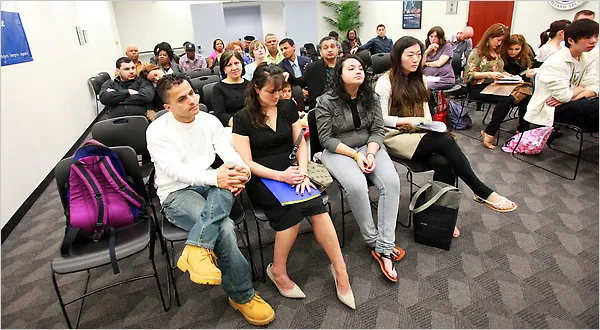
The US Consular Backlog refers to the accumulation of visa applicants waiting for in-person interviews at US embassies and consulates abroad. A backlog forms when demand for interviews exceeds the number of appointments a post can conduct within a given period.
Key distinctions to understand:
- Backlog ≠ refusal: Waiting does not indicate a negative decision.
- Backlog ≠ processing delay: Many cases are “ready,” but cannot proceed without an interview slot.
- Backlogs vary by post: Conditions differ by country, city, and season.
In 2026, backlogs remain uneven—some posts show gradual improvement, while others continue to face prolonged queues.
Why Visa Appointment Backlogs Exist
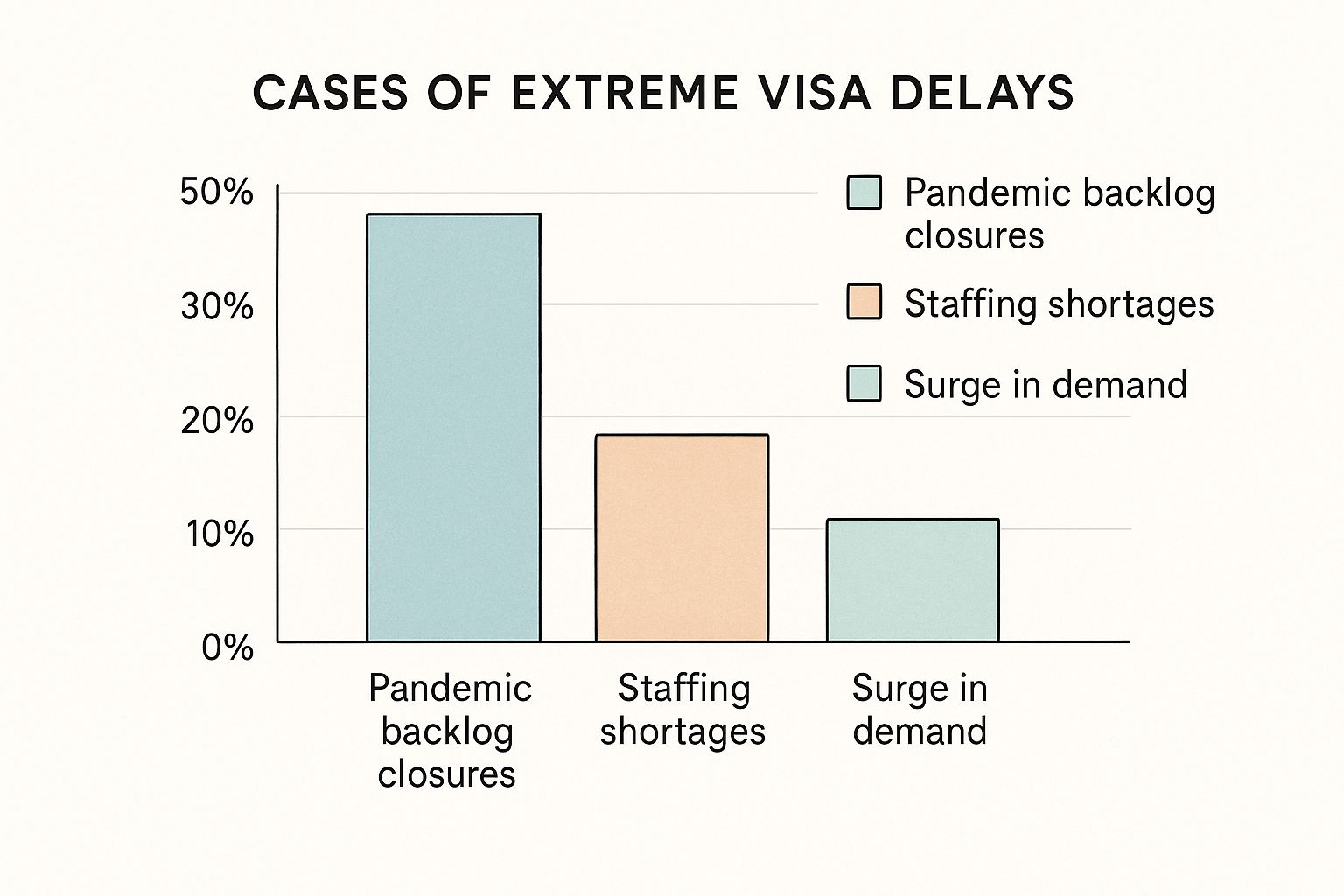


A visa appointment backlog typically results from multiple overlapping factors rather than a single cause.
Demand Exceeds Capacity
Global mobility has rebounded, and demand for visitor, student, and work visas is high. Many posts receive far more appointment requests than they can accommodate.
Staffing and Resource Constraints
Consular sections operate within fixed staffing levels. Recruiting and training officers takes time, and capacity cannot be expanded overnight.
Security and Compliance Requirements
Interviews must meet strict screening standards. These safeguards are essential, but they limit how many cases can be handled daily.
Policy and Procedural Changes
New rules, documentation standards, or interview policies can slow throughput as posts adjust workflows.
Embassy Delays Explained
Embassy delays describe the broader set of issues that affect scheduling, interviewing, and post-interview steps at a specific consulate.
Common contributors include:
- Local conditions (holidays, emergencies, infrastructure limits)
- Seasonal spikes (summer travel, fall student intakes)
- Prioritization rules (certain categories moved ahead of others)
- Operational adjustments (system upgrades or policy rollouts)
Importantly, embassy delays are local. Two applicants applying for the same visa in different countries may face very different wait times.
Which Visa Categories Are Most Affected
Backlogs do not affect all visas equally. In 2026, the following categories commonly experience longer waits:
Visitor Visas
High-volume demand and discretionary interviews contribute to longer queues at many posts.
Student Visas
Seasonal surges before academic terms can overwhelm calendars, especially at posts serving large student populations.
Temporary Work Visas
Start dates tied to employers increase pressure during peak months.
Immigrant Visas
While generally prioritized, immigrant interviews can still face delays due to caps, document readiness, and local capacity.
How Consular Backlogs Affect Applicants Waiting for Interview Slots
Extended waits have real consequences for applicants:
- Missed travel or program start dates
- Deferred employment opportunities
- Delayed family reunification
- Added financial costs (housing deposits, rebookings)
- Emotional strain and uncertainty
Understanding these impacts underscores why transparent backlog updates matter—even when solutions take time.
USCIS Delays vs Consular Backlogs: What’s the Difference?
Applicants often conflate delays at different stages. The distinction matters.
- USCIS processes petitions and applications filed inside the United States (e.g., approvals, adjustments).
- U.S. Department of State manages visa interviews and issuance at embassies abroad.
An approval from USCIS does not guarantee an immediate interview. Consular backlogs can still delay the final step.
Consular Backlog Trends in 2025–2026

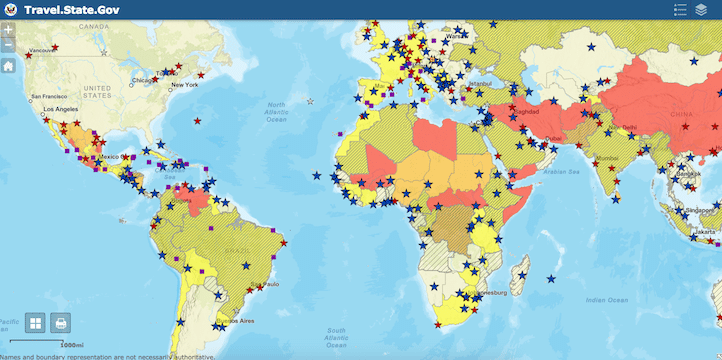
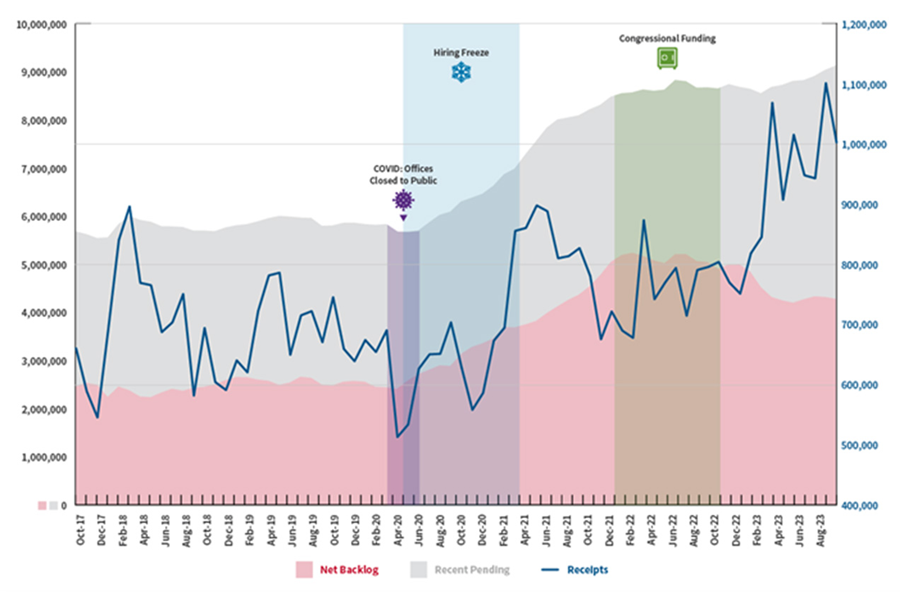
Recent trends show:
- Incremental recovery at some posts
- Persistent delays in high-demand regions
- Uneven appointment releases month to month
- Targeted prioritization for time-sensitive cases
“Backlog reduction” often means gradual improvement, not an immediate return to pre-backlog conditions.
Can Applicants Speed Up Interview Scheduling?
In limited situations, yes—but expectations should be realistic.
Emergency or Expedited Appointments
Some posts consider requests for genuine emergencies (e.g., medical needs). Approval is discretionary and documentation-heavy.
What Does Not Work
- Repeated rescheduling without cause
- Duplicate applications
- Unofficial “shortcut” promises
Attempts to game the system can backfire, causing further delays.
How to Prepare While Waiting for an Interview Slot
Productive preparation can reduce risk once an appointment opens.
- Keep documents current (valid passports, updated forms)
- Monitor official portals periodically (avoid constant checking)
- Plan finances conservatively (non-refundable bookings are risky)
- Stay informed about local post updates
Avoid filing duplicate applications unless clearly advised to do so.
Fees and Costs During Long Consular Waits
Backlogs can amplify costs applicants didn’t anticipate.
- Fees are non-refundable, even if waits are long
- Medical exams may need retaking if validity expires
- Courier and rescheduling costs can add up
For a clear view of current costs and rules, applicants often review:
https://www.usvisaintel.com/visa-fees/us-visa-fees-explained-all-categories-complete-cost-breakdown-for-first-time-applicants/
Applying Correctly to Avoid Additional Embassy Delays
Many delays are preventable with careful filing.
Best practices:
- Complete forms accurately (names, dates, categories)
- Select the correct visa class
- Bring organized, relevant documents
- Follow post-specific instructions closely
A structured overview of correct filing is available here:
https://www.usvisaintel.com/visa-process/how-to-apply-for-a-us-visa-step-by-step-guide/
Tracking Official Consular Backlog Updates


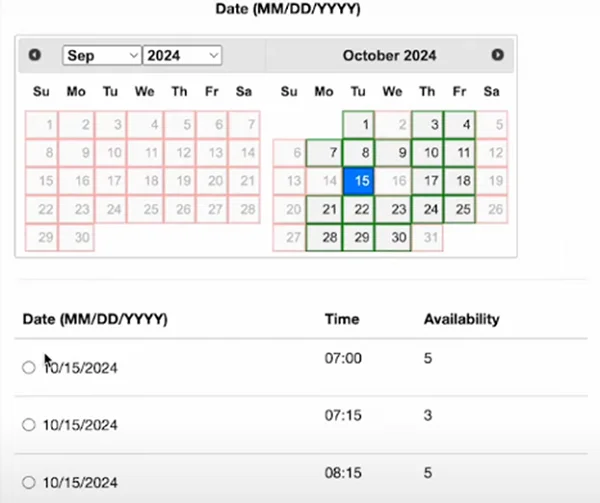
Responsible tracking reduces stress and misinformation.
- Use official appointment portals for your post
- Check official notices rather than rumors
- Understand that updates reflect capacity, not guarantees
For consolidated timing context in 2026, applicants often consult:
https://www.usvisaintel.com/processing-time/us-visa-processing-time-complete-2026-guide-for-applicants-waiting-for-decisions/
Common Mistakes Applicants Make During Backlogs
Backlogs can push applicants into poor decisions.
Frequent errors include:
- Panic rescheduling that resets progress
- Paying agents who promise guaranteed slots
- Letting documents expire
- Missing interview readiness due to long waits
Patience paired with preparation is usually the best approach.
What US Consular Backlog Updates Do Not Mean
Clearing misconceptions helps manage expectations.
Backlog updates do not mean:
- Your application is weak
- Approval is unlikely
- Faster slots guarantee success
- All posts will improve at the same pace
Each case remains individual and discretionary.
Frequently Asked Questions (FAQ)
Why are US embassy interview slots so delayed?
High demand, staffing limits, and security requirements are the main drivers.
How long is the US consular backlog in 2026?
It varies widely by post and visa category; some see improvements, others remain constrained.
Can visa interviews be expedited?
Only in limited, documented emergencies, subject to post discretion.
Do consular backlogs affect all countries equally?
No. Local demand and capacity create significant differences.
What should applicants do while waiting?
Prepare documents, monitor official updates, and plan cautiously.
Practical Guidance for Applicants Waiting in 2026
In 2026, the US Consular Backlog remains a defining feature of the visa journey for many applicants. While interview delays are frustrating, they are usually systemic rather than personal. Understanding the causes of visa appointment backlogs and embassy delays allows applicants to plan calmly and avoid costly mistakes.
Those who stay informed through official channels, keep documents current, and prepare thoroughly for interviews are better positioned to move forward when slots become available. Realistic expectations, careful preparation, and informed decision-making remain the most reliable tools for navigating extended waits at US embassies and consulates.